

Omega-3 Without the Marketing: What the Science Says, How to Test, and How to Choose a Supplement
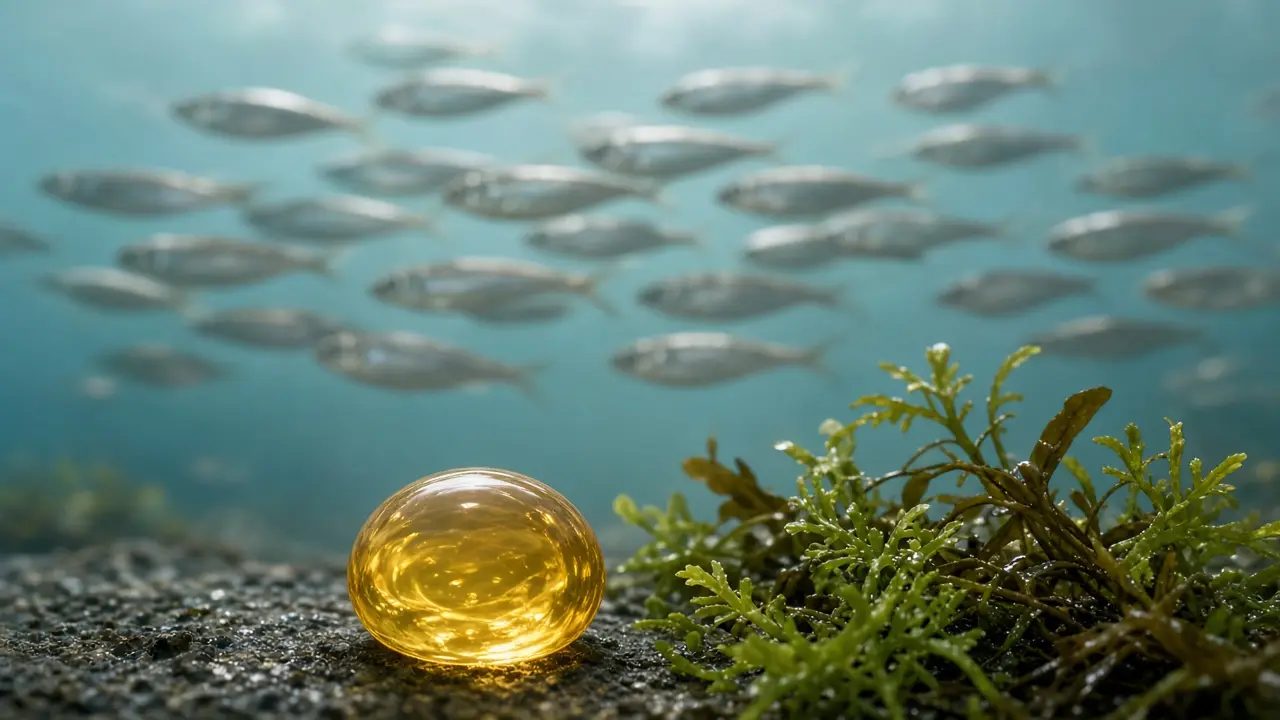
I went through the large studies and reviews on omega-3 and wrote down what is actually known, what isn’t, how to measure your own level, and what to look for in a supplement. I don’t recommend any specific product.
Omega-3 in a nutshell
Three of them matter most:
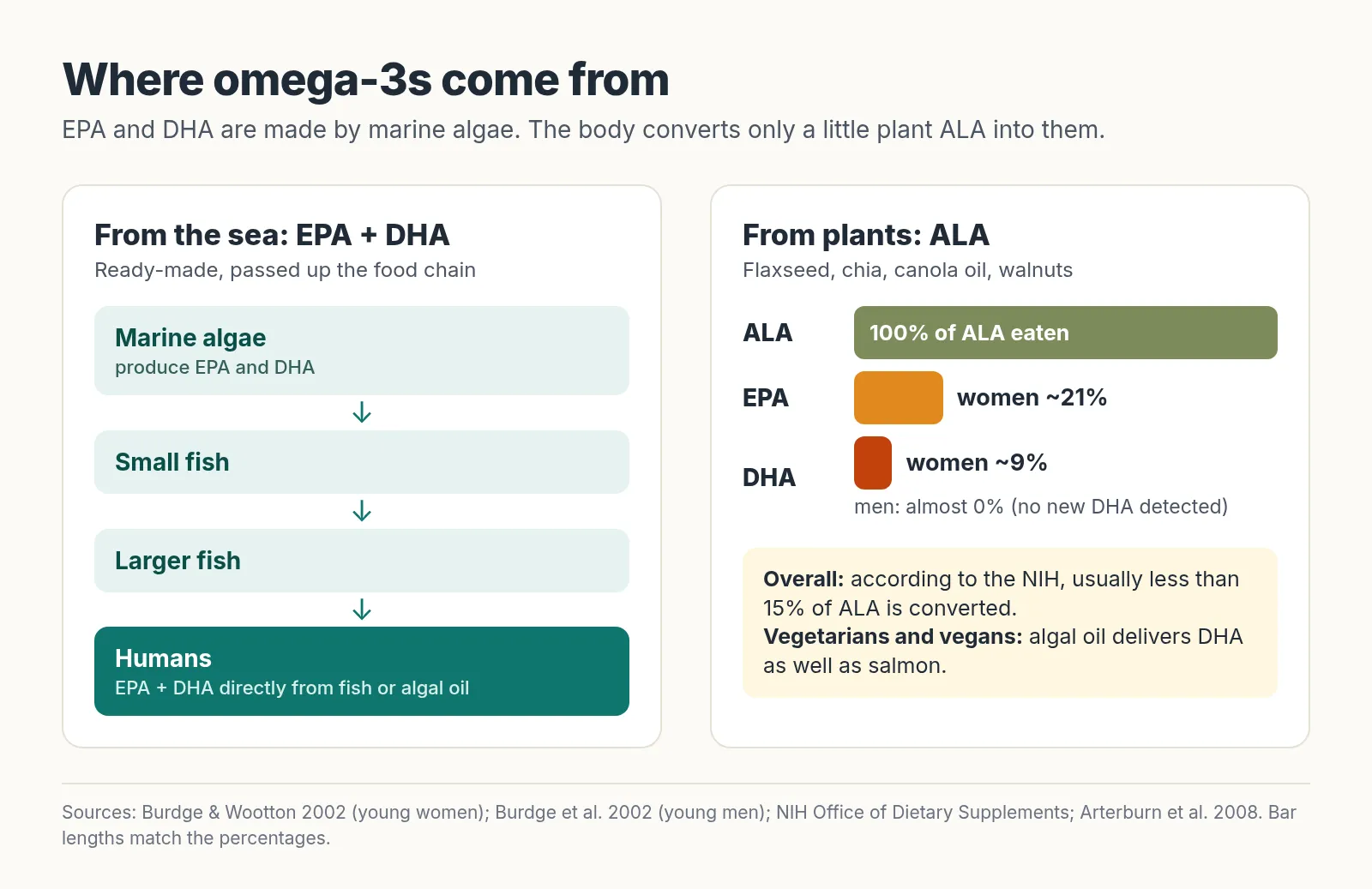
- EPA and DHA are found in fish and seafood. But fish don’t make them. They are produced by marine algae and build up along the food chain (NIH).
- ALA comes from plants: flaxseed, chia, canola (rapeseed) oil, walnuts.
The body can turn ALA into EPA and DHA only in small amounts, usually less than 15% according to the NIH (NIH). Studies with labeled fats showed a big difference between the sexes. Young women converted about 21% of ALA into EPA and 9% into DHA (Burdge 2002). In young men, no new DHA appeared at all (Burdge 2002). Flaxseed is healthy, but it won’t cover your DHA.
Vegetarians and vegans still have a good option: algal oil. It raises DHA in the blood just as well as salmon (Arterburn 2008).
What science actually knows (and what it doesn’t)
Two kinds of evidence need to be kept apart:
- Observational studies: people with higher omega-3 levels in their blood do better.
- Randomized controlled trials (people are randomly assigned to a supplement or a placebo): these show whether the supplement itself is responsible.
The observational data look good. In a pooled analysis of 17 studies with 42,466 people, those with the highest blood levels of EPA, DPA and DHA had a 15–18% lower risk of death from any cause than those with the lowest (Harris 2021). Plant ALA showed no such link.
The supplement trials are more sobering:
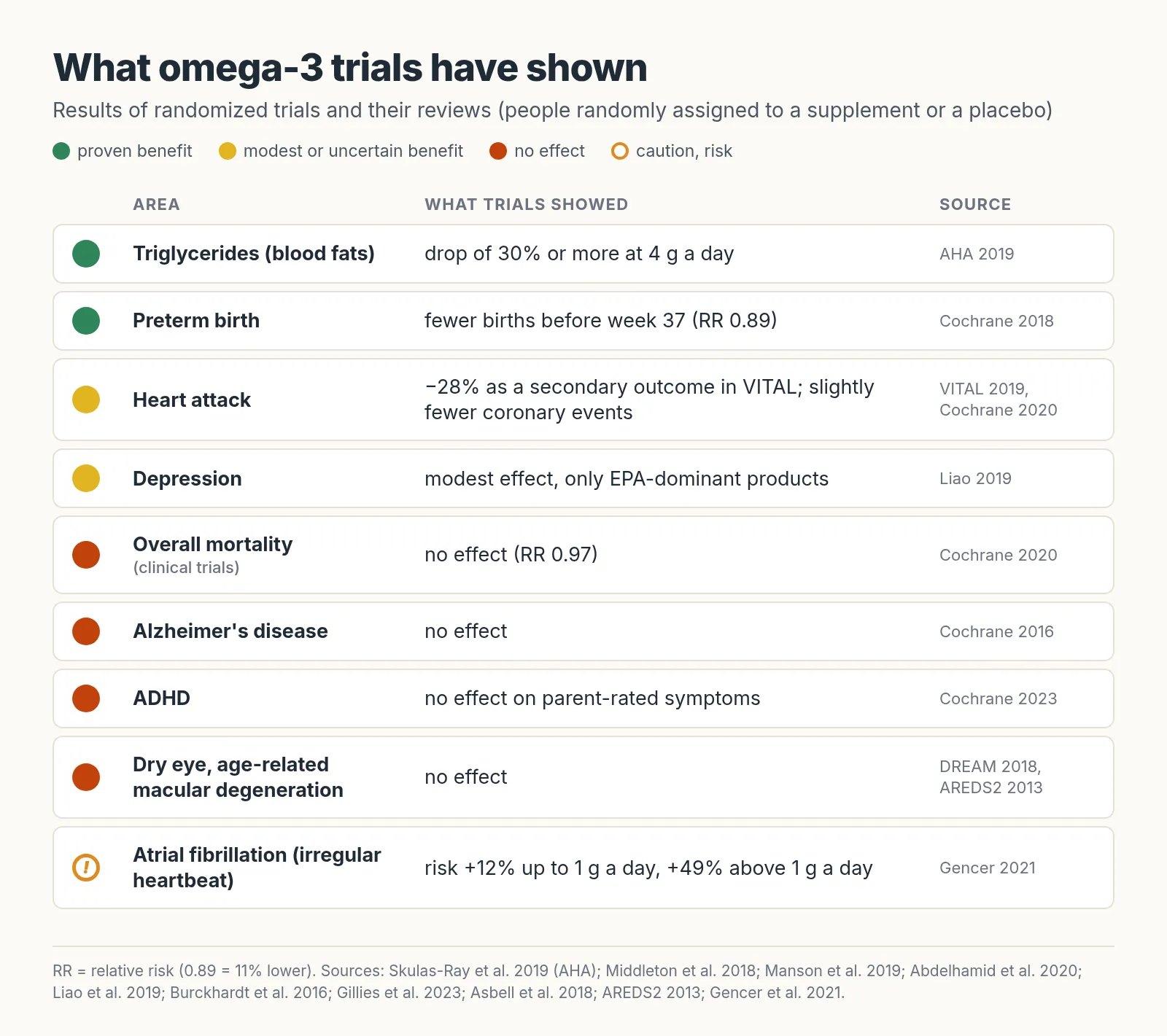
- Healthy people: in the VITAL trial, almost 26,000 people took 1 g of omega-3 a day for 5 years. Major cardiovascular events and cancers did not go down. There were fewer heart attacks, but that was only a secondary outcome (VITAL).
- People with diabetes: the ASCEND trial came out similarly, with no difference in serious vascular events (ASCEND).
- A review of 86 trials (Cochrane): omega-3 has little or no effect on overall mortality and cardiovascular events. It slightly lowers coronary events (those involving the heart’s own arteries) and blood fats (Cochrane 2020).
- High prescription doses (4 g a day): the REDUCE-IT trial with pure EPA showed 25% fewer events (REDUCE-IT). But its mineral-oil placebo itself worsened inflammatory markers, so the benefit may look bigger than it really is (Ridker 2022). STRENGTH, a similar trial with EPA plus DHA, showed no benefit at all (STRENGTH).
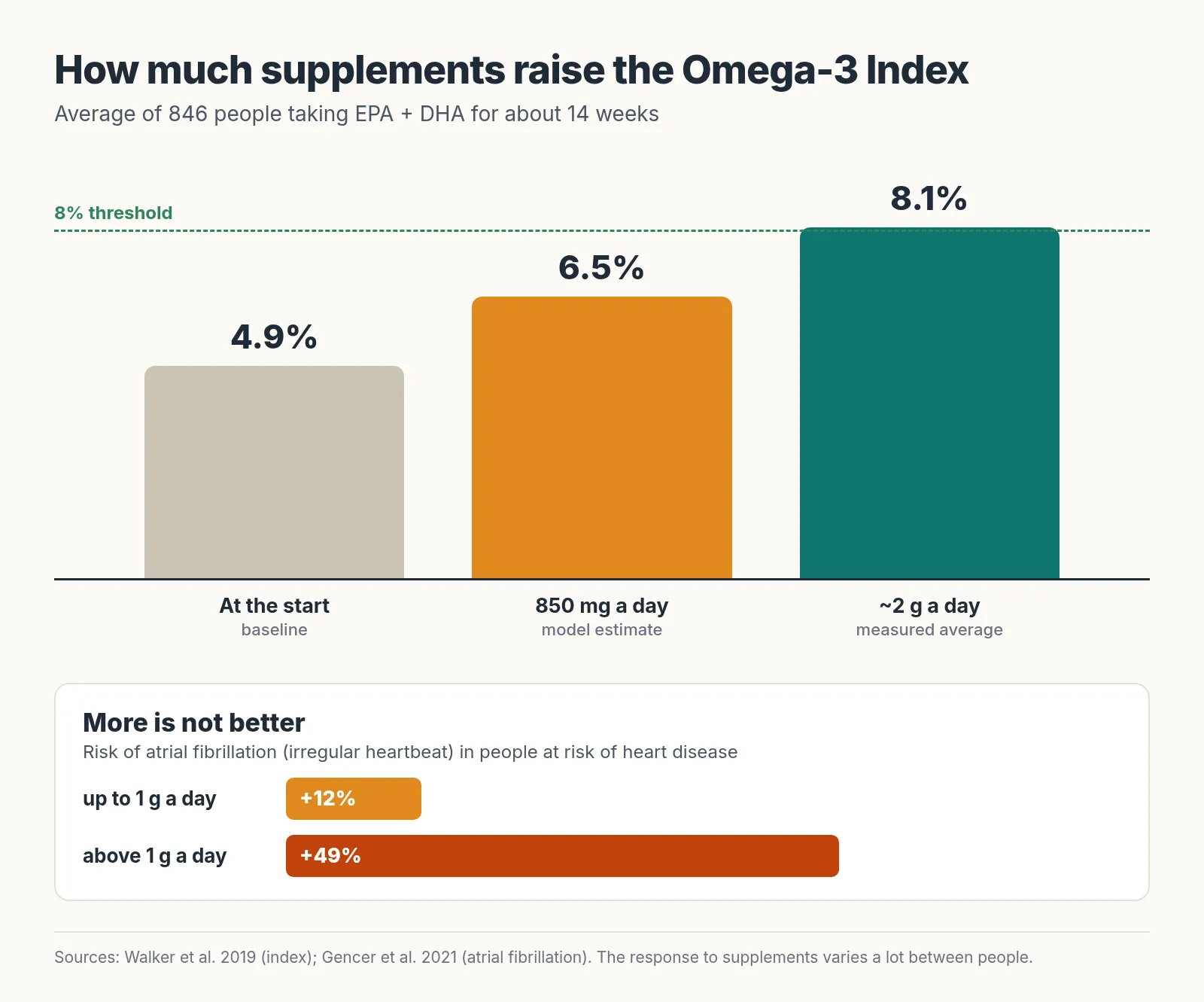
More is not better. In people at risk of heart disease, supplements raised the risk of atrial fibrillation (an irregular heartbeat): by 12% at doses up to 1 g a day and by 49% above 1 g a day (Gencer 2021).
Brain, eyes, joints:
- Depression: a modest benefit, but only with EPA-dominant products (Liao 2019).
- Alzheimer’s disease: no effect (Cochrane 2016).
- ADHD: parent-rated symptoms did not improve (Cochrane 2023).
- Dry eye: no effect (DREAM).
- Age-related macular degeneration: no effect (AREDS2).
- Autoimmune diseases: no proven reduction (VITAL 2022).
Where the results are clear:
- Pregnancy: omega-3 reduces the number of preterm births (Cochrane 2018).
- High triglycerides (blood fats): 4 g a day lowers them by at least 30%. That is treatment under a doctor’s supervision, though (AHA 2019).
In short: people with higher omega-3 levels live longer. Whether that is down to omega-3 alone or also to their overall lifestyle isn’t certain. A supplement makes the most sense when your level is low.
Omega-6 is not the enemy
You often hear that too much omega-6 causes inflammation and a long list of diseases. The data don’t back this up. The main omega-6 is linoleic acid (from nuts, seeds and vegetable oils). Across 30 studies with almost 69,000 people, higher blood levels of it were linked to a lower risk of cardiovascular disease (Marklund 2019). Eating more of it also doesn’t raise arachidonic acid in the body, the fatty acid with the inflammatory reputation (Rett & Whelan 2011).
Nobody has established an ideal omega-6 : omega-3 ratio. According to the NIH, raising EPA and DHA matters much more than cutting omega-6 (NIH). So there’s no need to fear nuts. Just add omega-3.
Measure it: the Omega-3 Index
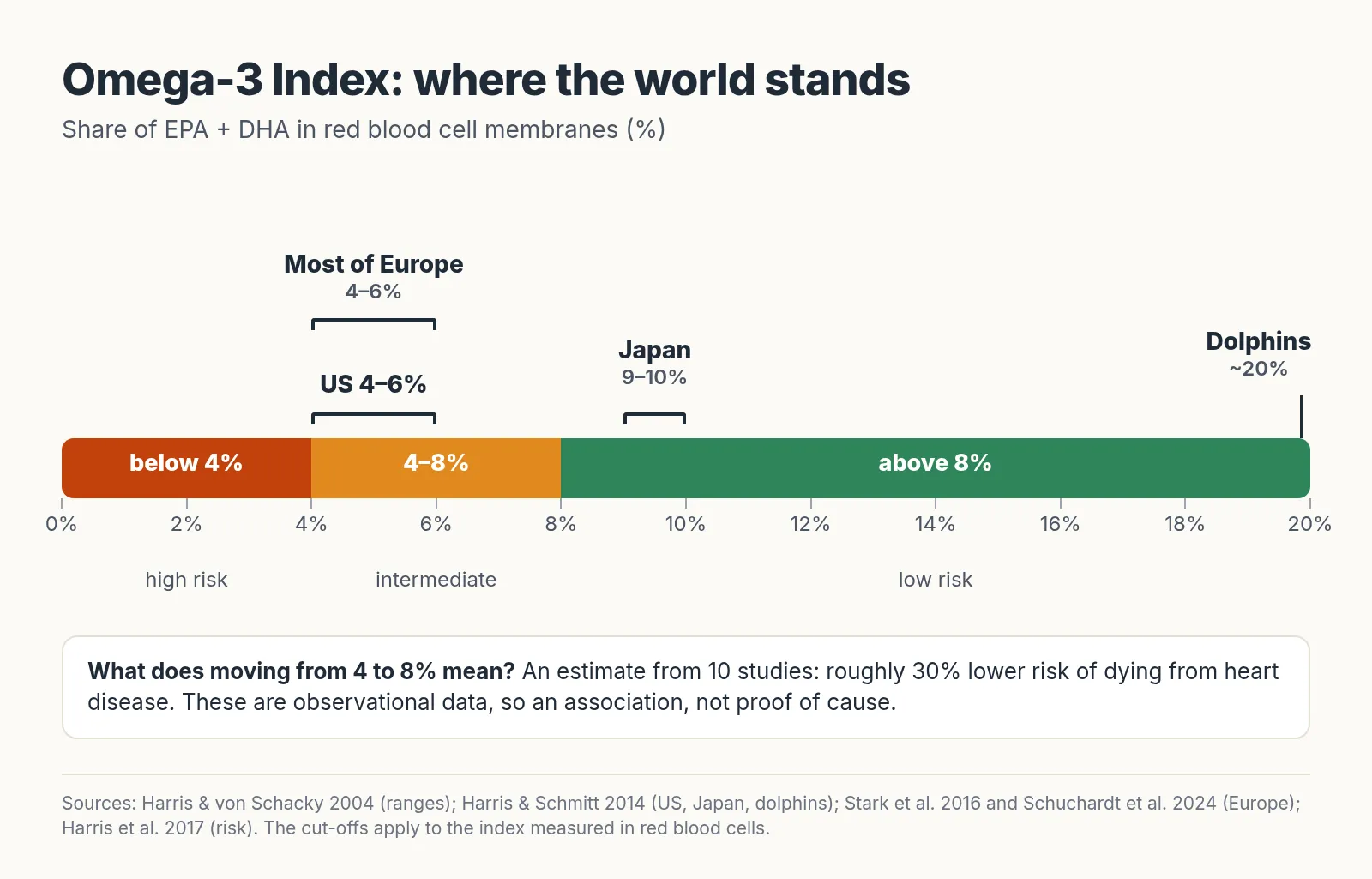
The Omega-3 Index is the share of EPA + DHA in the membranes of red blood cells, expressed as a percentage. It was proposed in 2004 by W. Harris and C. von Schacky (Harris 2004). Three ranges are used:
- below 4%: high risk
- 4–8%: intermediate
- above 8%: low risk
Based on an estimate from 10 studies, moving from 4 to 8% was associated with roughly a 30% lower risk of dying from heart disease (Harris 2017). But that is an association, not proof of cause. And Harris owns a lab that sells these tests.
Most of the world is below 6%. Mainly Japan and Scandinavia are above 8% (Stark 2016, 2024 update). The US average is 4–6%, Japan’s 9–10% (Harris & Schmitt 2014). A fun fact: dolphins sit around 20%, even though they eat roughly 165 times more EPA + DHA (relative to energy) than the average American. So the level doesn’t keep rising forever.
Smoking lowers the index; fish and supplements raise it (Schuchardt 2023). In the Framingham study, the gap between the lowest and highest index came out as roughly 4.7 years of life. That’s about the same as what smoking takes away at age 65 in the same model (McBurney 2021, press release). This is a statistical prediction, not a promise that a supplement will add years to your life.
Today the test is usually done from a drop of blood from a finger prick. Labs don’t all measure the same thing, though: some report the index directly in red blood cells, or convert it from the dried blood spot using a validated conversion (Harris & Polreis 2016). Others report a whole-blood value without conversion, or include DPA in the index. Yet the 4% and 8% cut-offs apply to EPA + DHA in red blood cells (Harris & von Schacky 2004). Even small differences in method produce big differences in the result (von Schacky 2020). So ask the lab what exactly it measures, and always test before and after supplementing at the same lab. Wait at least 3–4 months before retesting. The red blood cell level reflects roughly the last 1–2 months and only fully settles after about six months (Katan 1997). Watch the trend, not a single number.
Food first
EFSA (the European Food Safety Authority) links 1–2 servings of fish a week to better brain development in children and 3–4 servings to a lower risk of heart disease in adults (EFSA 2015). It also advises limiting fish high in mercury, such as swordfish, pike, tuna or hake. This applies mainly to children and women of childbearing age. Low-mercury fish include salmon, sardines, anchovies and trout (NIH).
How much and how
- Typical adult: EFSA recommends 250 mg of EPA + DHA a day, plus an extra 100–200 mg of DHA during pregnancy and breastfeeding (EFSA 2010).
- To raise a low index: in a study of 846 people, participants took on average about 2 g of EPA + DHA a day for roughly 14 weeks. Their index rose from 4.9 to 8.1% (Walker 2019). At 850 mg a day, the same model predicts about 6.5%. The response varies a lot between people, which is why a follow-up test makes sense after about 3–4 months.
- Upper limit: EFSA sees no safety concern for adults up to 5 g of EPA + DHA a day (EFSA 2012). Because of atrial fibrillation, though, I recommend talking to a doctor before going above 1 g a day, especially if you have heart disease or take blood thinners (Gencer 2021).
- Take it with a fatty meal. For some forms, up to three times more gets absorbed this way (Lawson & Hughes 1988).
How to choose a supplement: a checklist
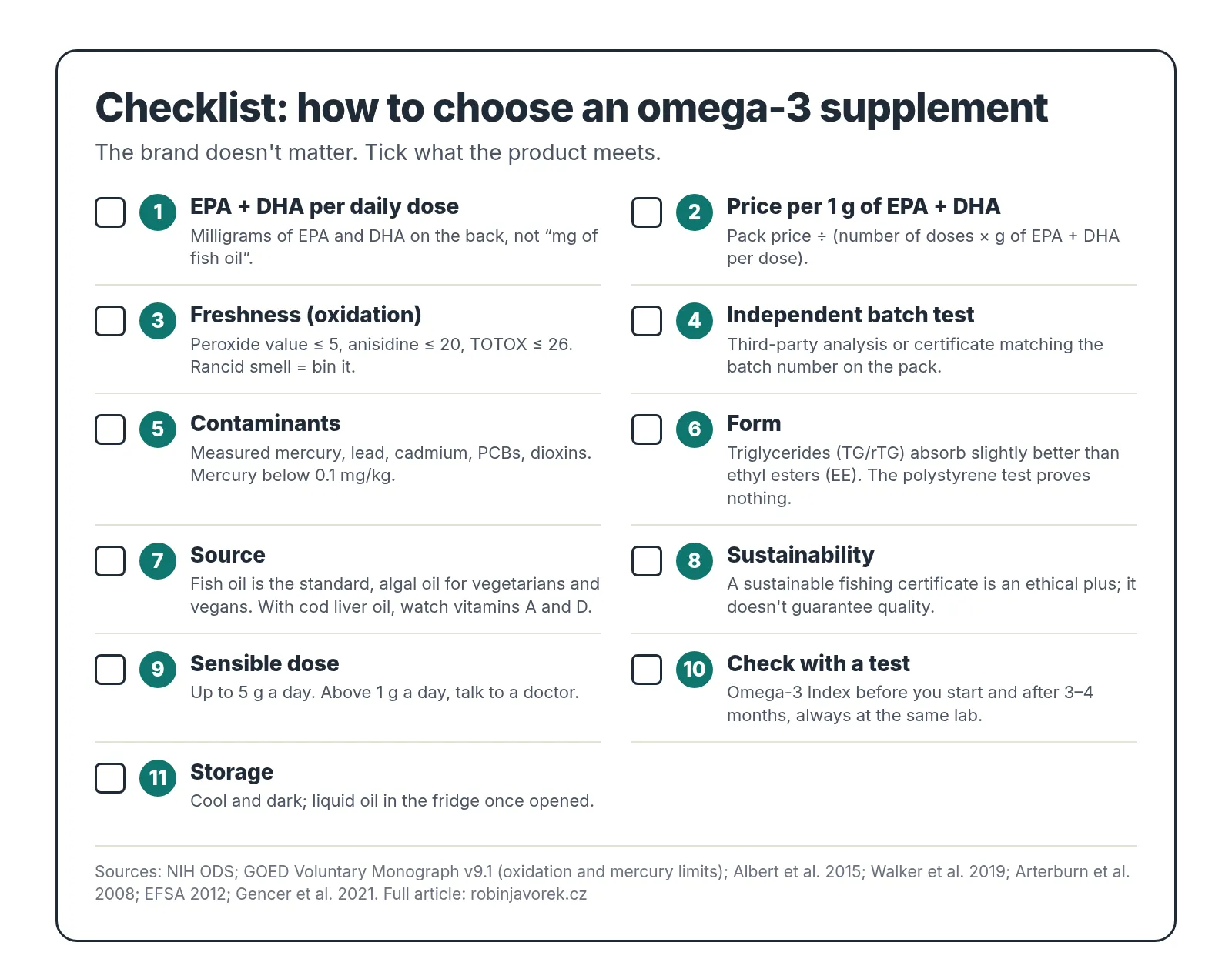
The brand doesn’t matter. These few things do:
- How much EPA + DHA is in a daily dose? “1000 mg fish oil” on the front tells you nothing. A typical capsule contains about 180 mg of EPA and 120 mg of DHA (NIH). Look for the milligrams of EPA and DHA on the back.
- Price per 1 g of EPA + DHA. Work it out like this: pack price ÷ (number of doses × grams of EPA + DHA per dose). It’s the only fair way to compare products.
- Freshness (oxidation = rancidity). Does the manufacturer publish oxidation values? The industry limits are a peroxide value of at most 5, an anisidine value of at most 20 and a TOTOX (total oxidation) of at most 26 (GOED). In New Zealand, half of the products tested exceeded the TOTOX limit. Most also contained less EPA and DHA than the label promised (Albert 2015). A capsule that smells rancid belongs in the bin. Flavoring can mask rancidity, though.
- An independent test of your batch. Look for a lab analysis or a third-party certificate (IFOS, for example) that matches the batch number on your pack. In the study above, neither price, expiry date nor country of origin said anything about quality (Albert 2015).
- Contaminants. Mercury, lead, cadmium, PCBs and dioxins should be measured. For mercury, for example, the limit is below 0.1 mg/kg (GOED). Purified fish oils tend to contain negligible mercury (Foran 2003).
- Form. Triglycerides (natural or re-esterified, “TG/rTG”) are absorbed slightly better than ethyl esters (“EE”). At the same dose, that’s about 1 percentage point more on the index (Walker 2019, Dyerberg 2010). Ethyl esters work fine with a fatty meal too. The “polystyrene test” proves nothing. Ethyl esters dissolve polystyrene faster because of their chemistry, but that says nothing about freshness, dose or purity (Taiwan’s Ministry of Health and Welfare). You’ll find the form on the label.
- Source. Fish oil is the standard. Algal oil is for vegetarians and vegans (Arterburn 2008). There’s little evidence that krill is absorbed better, and krill capsules tend to have a low dose (Ulven 2015). Cod liver oil also contains vitamins A and D, so keep an eye on your total intake of those (NIH).
- Sustainability. A sustainable fishing certificate is an ethical plus. It doesn’t guarantee the quality of the oil, though.
- A sensible dose. Stay under 5 g a day. Above 1 g a day, talk to a doctor (see above).
- Check with a test. Measure your index before you start and again after 3–4 months. Ideally at a lab that doesn’t sell supplements itself.
- Storage. Keep it cool and dark; liquid oil goes in the fridge once opened.
Show AI prompt
Copy the text below into your AI assistant with web access (ChatGPT, Gemini, Perplexity, Grok…). It will ask you for what it needs to know.
Help me find an omega-3 supplement (EPA + DHA). Before you start searching, ask me about: the country where I shop, my monthly budget, my diet (how often I eat fish, whether I'm vegetarian or vegan) and my target daily dose of EPA + DHA (if I don't know it, suggest one based on EFSA recommendations and explain why). Then search only for products available in my country.

Choose ONLY by the following criteria, not by marketing claims, online store ratings or brand popularity:

1. The amount of EPA and DHA (separately and combined) in one recommended daily dose, in mg, according to the label.
2. Price per 1 g of EPA + DHA = pack price ÷ (number of doses × g of EPA + DHA per dose). Show the calculation.
3. Chemical form: natural triglycerides, re-esterified triglycerides (rTG), ethyl esters (EE), phospholipids (krill) or other.
4. Oxidation: peroxide value, anisidine value and TOTOX, if the manufacturer publishes them (GOED limits: PV ≤ 5, AV ≤ 20, TOTOX ≤ 26). For flavored oils, point out that the anisidine value may be distorted.
5. Independent third-party testing of specific batches (e.g. IFOS or a published certificate of analysis / CoA), with a link to the specific result.
6. Contaminants: mercury, lead, cadmium, arsenic, PCBs, dioxins – measured values or a link to the analysis.
7. Oil source (fish and which species, algae, krill) and any other substances (e.g. vitamins A and D in cod liver oil).

Rules:
- For each product, link to the source of every figure (label, manufacturer's page, certificate, lab analysis).
- If you can't find a figure, write "not found" explicitly. Don't estimate anything or calculate without data.
- Don't treat marketing claims ("purest", "best absorption", "premium quality") as facts.
- Put the result in a table: product | EPA + DHA per daily dose | price per 1 g of EPA + DHA | form | oxidation (PV/AV/TOTOX) | third-party batch test (link) | contaminants | source | missing data.
- Rank products only by price per 1 g of EPA + DHA, among those with a published independent batch test. List the others separately with a note on what's missing.
- At the end, remind me that above 1 g of EPA + DHA a day it's advisable to consult a doctor (especially with heart problems or when taking blood thinners).
Sources
- NIH Office of Dietary Supplements: Omega-3 Fatty Acids – Fact Sheet for Health Professionals
- Burdge GC, Wootton SA (2002): Conversion of alpha-linolenic acid… in young women. Br J Nutr.
- Burdge GC et al. (2002): EPA and DPA are the principal products of ALA metabolism in young men. Br J Nutr.
- Arterburn LM et al. (2008): Algal-oil capsules and cooked salmon: nutritionally equivalent sources of DHA. J Am Diet Assoc.
- Harris WS et al. (2021): Blood n-3 fatty acid levels and total and cause-specific mortality from 17 prospective studies. Nat Commun.
- Manson JE et al. (2019): Marine n-3 fatty acids and prevention of cardiovascular disease and cancer (VITAL). N Engl J Med.
- Bowman L et al., ASCEND (2018): Effects of n-3 fatty acid supplements in diabetes mellitus. N Engl J Med.
- Abdelhamid AS et al. (2020): Omega-3 fatty acids for the primary and secondary prevention of cardiovascular disease. Cochrane.
- Bhatt DL et al. (2019): Cardiovascular risk reduction with icosapent ethyl for hypertriglyceridemia (REDUCE-IT). N Engl J Med.
- Ridker PM et al. (2022): Effects of icosapent ethyl and a mineral oil comparator on inflammatory biomarkers in REDUCE-IT. Circulation.
- Nicholls SJ et al. (2020): High-dose omega-3 fatty acids vs corn oil (STRENGTH). JAMA.
- Gencer B et al. (2021): Marine omega-3 supplementation and risk of atrial fibrillation. Circulation.
- Liao Y et al. (2019): Efficacy of omega-3 PUFAs in depression: a meta-analysis. Transl Psychiatry.
- Burckhardt M et al. (2016): Omega-3 fatty acids for the treatment of dementia. Cochrane.
- Gillies D et al. (2023): PUFA for ADHD in children and adolescents. Cochrane.
- Asbell PA et al., DREAM (2018): n-3 fatty acid supplementation for the treatment of dry eye disease. N Engl J Med.
- AREDS2 Research Group (2013): Lutein + zeaxanthin and omega-3 fatty acids for age-related macular degeneration. JAMA.
- Hahn J et al. (2022): Vitamin D and marine omega-3 supplementation and incident autoimmune disease (VITAL). BMJ.
- Middleton P et al. (2018): Omega-3 fatty acid addition during pregnancy. Cochrane.
- Skulas-Ray AC et al. (2019): Omega-3 fatty acids for the management of hypertriglyceridemia (AHA). Circulation.
- Marklund M et al. (2019): Biomarkers of dietary omega-6 fatty acids and incident cardiovascular disease and mortality. Circulation.
- Rett BS, Whelan J (2011): Increasing dietary linoleic acid does not increase tissue arachidonic acid content. Nutr Metab.
- Harris WS, von Schacky C (2004): The Omega-3 Index: a new risk factor for death from coronary heart disease? Prev Med.
- Harris WS et al. (2017): The Omega-3 Index and relative risk for coronary heart disease mortality: estimation from 10 cohort studies. Atherosclerosis.
- Stark KD et al. (2016): Global survey of the omega-3 fatty acids DHA and EPA in the blood stream of healthy adults. Prog Lipid Res.
- Harris WS, Polreis J (2016): Measurement of the Omega-3 Index in Dried Blood Spots. Ann Clin Lab Res.
- von Schacky C (2020): Omega-3 index in 2018/19. Proc Nutr Soc.
- Katan MB et al. (1997): Kinetics of the incorporation of dietary fatty acids into serum cholesteryl esters, erythrocyte membranes, and adipose tissue. J Lipid Res.
- Schuchardt JP et al. (2024): Omega-3 world map: 2024 update. Prog Lipid Res.
- Harris WS, Schmitt TL (2014): Unexpected similarity in RBC DHA and AA levels between bottlenose dolphins and humans. PLEFA.
- Schuchardt JP et al. (2023): Estimation and predictors of the Omega-3 Index in the UK Biobank. Br J Nutr.
- McBurney MI et al. (2021): Using an erythrocyte fatty acid fingerprint to predict risk of all-cause mortality: the Framingham Offspring Cohort. Am J Clin Nutr. IMIM press release.
- EFSA (2015): Fish: scenarios indicate benefits versus risks
- EFSA (2010): Dietary Reference Values for fats
- EFSA (2012): Tolerable Upper Intake Level of EPA, DHA and DPA
- Walker RE et al. (2019): Predicting the effects of supplemental EPA and DHA on the omega-3 index. Am J Clin Nutr.
- Lawson LD, Hughes BG (1988): Absorption of EPA and DHA from fish oil triacylglycerols or ethyl esters co-ingested with a high-fat meal. Biochem Biophys Res Commun.
- GOED (2026): Voluntary Monograph v9.1
- Albert BB et al. (2015): Fish oil supplements in New Zealand are highly oxidised and do not meet label content of n-3 PUFA. Sci Rep.
- Foran SE et al. (2003): Measurement of mercury levels in concentrated over-the-counter fish oil preparations. Arch Pathol Lab Med.
- Dyerberg J et al. (2010): Bioavailability of marine n-3 fatty acid formulations. PLEFA.
- Taiwan Ministry of Health and Welfare: Fish oil and polystyrene – clarification (in Chinese)
- Ulven SM, Holven KB (2015): Comparison of bioavailability of krill oil versus fish oil and health effect. Vasc Health Risk Manag.